



Balcony Plants Dubai: The Complete Guide to Transforming Your Outdoor Space

Dubai is a city of balconies. From the soaring residential towers of Dubai Marina and JBR to the mid-rise apartment buildings of JLT, Business Bay, and Downtown Dubai, from townhouse communities in Arabian Ranches and Jumeirah Village Circle to villa compounds across Mirdif and Al Barsha — the overwhelming majority of Dubai residents have access to at least one outdoor balcony or terrace space.
And yet, for all the architectural investment that goes into creating these spaces, the majority of Dubai balconies sit largely underutilised — a place for a few plastic chairs, perhaps a drying rack, and maybe a solitary, struggling plant that was purchased with optimism and neglected into a sorry state.
This guide exists to change that. A Dubai balcony, treated with the right plants, the right approach, and the right knowledge, can become one of the most genuinely valuable spaces in your home — a private outdoor retreat, a productive kitchen garden, a lush green escape from the urban intensity of the city. The plants exist. The knowledge is here. The only missing ingredient is confidence — and this guide provides it.
Understanding Your Dubai Balcony Before Choosing Plants
The single biggest mistake Dubai balcony gardeners make is choosing plants before understanding their specific balcony conditions. Dubai balconies vary enormously in their growing conditions — and a plant that thrives on one Dubai balcony can fail completely on another. Before selecting a single plant, understand these key variables:
Sunlight — The Most Critical Variable
South-facing balconies: Receive the most intense, prolonged direct sunlight — full sun for most of the day. In Dubai's summer, afternoon sun on south-facing balconies is genuinely extreme — temperatures at the balcony surface can exceed 55–60°C. Only the most heat and sun-tolerant plants will survive here without shade assistance.
West-facing balconies: Receive intense afternoon sun — particularly powerful in Dubai's summer from approximately 1pm–7pm. The most challenging sun exposure for plants — the hottest part of the day coincides with the longest sun period. Heat-tolerant plants are essential; shade cloth during peak summer afternoons is beneficial.
East-facing balconies: Receive gentle morning sun and shade for the rest of the day — often the most plant-friendly orientation for Dubai balconies. Morning sun is less intense than afternoon sun, and the afternoon shade provides welcome relief from Dubai's peak heat. A much wider range of plants performs well on east-facing balconies.
North-facing balconies: Receive the least direct sunlight — indirect, diffuse light throughout the day. While this limits the range of sun-loving plants that can be grown, it opens up options for shade-tolerant varieties that cannot survive on sunnier balconies.
Corner balconies and irregular orientations: Many Dubai apartment balconies receive sun from multiple directions at different times of day — requiring careful observation before plant selection.
Floor Level — Height and Wind Exposure
Lower floors (1–10): Generally more sheltered from wind, potentially more shaded by surrounding buildings and vegetation. May receive reflected heat from paved surfaces below.
Middle floors (11–25): Variable wind exposure depending on surrounding buildings. Generally good balance of sun and wind conditions.
Upper floors (25+): Significantly increased wind exposure — the shamal wind and regular Dubai sea breezes are felt more strongly at height. Wind accelerates moisture loss from soil and foliage, may physically damage delicate plants, and can topple tall, top-heavy containers. Wind-resistant plants and secure, heavy containers become increasingly important at upper floor levels.
Penthouse and rooftop terraces: Maximum wind and sun exposure — the most challenging conditions for balcony gardening in Dubai. Windbreaks, shade structures, and the most resilient plant varieties are essential.
Weight Limits — A Practical Safety Consideration
Dubai apartment balconies have structural weight limits — typically specified in the building's engineering documentation and often lower than residents assume. Large containers filled with moist soil can be extremely heavy:
- A 60-litre container with moist soil: approximately 60–80kg
- A 100-litre container with moist soil: approximately 100–130kg
- Multiple large containers plus furniture, people, and other loads can quickly approach structural limits
Before installing multiple large containers on a Dubai balcony, verify the structural weight limit with your building management. Use lightweight growing media (incorporating perlite and lightweight aggregates) and lightweight container materials (fibreglass, UV-stabilised plastic) to reduce load while maintaining growing capacity.
Microclimate Effects
Reflected heat: Balconies with light-coloured tiled or concrete floors reflect significant heat upward — plants at lower levels experience ground-level temperatures substantially higher than ambient air temperature. Raising pots off the floor surface on pot feet or slatted wooden decking reduces this heat transfer.
Building-reflected heat: Glass facades, light-coloured walls, and metallic surfaces on adjacent buildings can direct significant additional heat onto balconies — sometimes unexpectedly. Observe your balcony conditions across different times of day and season before committing to a plant selection.
Rain shadow: In the UAE's limited rainfall, many balconies with overhead cover receive almost no natural rainfall at all — plants rely entirely on manual irrigation.
The Best Balcony Plants for South and West-Facing Dubai Balconies
South and west-facing balconies — the most common and challenging orientation in Dubai's residential towers — require plants that genuinely embrace heat, tolerate drought, and positively respond to intense sun. The following varieties are proven performers in the UAE's most demanding balcony conditions:
Bougainvillea — The Queen of Dubai Balconies
If there is one plant that defines balcony gardening in Dubai, it is bougainvillea. Its spectacular colour displays — available in vivid magenta, deep purple, coral orange, soft pink, pure white, and bicolour combinations — its extraordinary drought tolerance once established, and its ability to positively thrive in full Dubai sun make it the benchmark balcony plant for sunny orientations across the UAE.
Growing bougainvillea on a Dubai balcony:
Container size: Minimum 40–50 litres — bougainvillea develops a substantial root system and will not thrive long-term in small containers.
Training: Bougainvillea is naturally a vigorous climber — train it on a trellis, balcony railing, wire frame, or purpose-built support structure to create the most dramatic visual effect. Use soft ties rather than wire to secure stems — wire can cut into the fast-growing branches.
Flowering trigger: Bougainvillea flowers most prolifically when mildly water-stressed — counter-intuitively, reducing watering during the non-flowering period encourages more dramatic flowering displays. Once in flower, maintain consistent moisture to sustain the display.
Pruning: Prune hard after each major flowering flush to encourage the next cycle of new growth and subsequent flowering. In Dubai's climate, bougainvillea can produce multiple flowering cycles per year with appropriate management.
Varieties for Dubai balconies: 'Barbara Karst' (deep magenta — the most commonly grown and most reliable), 'San Diego Red' (vivid scarlet red), 'White Stripe' (white with green-variegated foliage), 'Double Pink' (soft pink, double-flowered), and many more.
Desert Rose (Adenium obesum) — Sculptural Sun-Lover
The desert rose is one of the most visually extraordinary balcony plants available for Dubai's sunny orientations — its dramatically swollen caudex (base), glossy leaves, and vivid pink, red, white, or multicoloured flowers combine sculptural form with outstanding ornamental impact. As its name emphatically suggests, it is perfectly adapted to exactly the conditions that Dubai's sunny balconies provide.
Growing desert rose on a Dubai balcony:
Container: Medium — 20–30 litres is sufficient for most specimens. The caudex (swollen trunk base) should be partially exposed above the soil surface — a key part of the plant's ornamental appeal.
Soil: Well-draining succulent or cactus mix — desert rose roots are extremely susceptible to rot in moisture-retentive soil.
Watering: Deeply but infrequently — every 10–14 days during the cool season, every 3 weeks in summer. Reduce further during the coolest winter months when the plant partially defoliates.
Flowering: Most prolific during the cooler months (October–May) — reduce watering slightly in late September/October to encourage the next flowering cycle.
Grafted varieties: Grafted desert rose specimens — where a colourful variety is grafted onto a more vigorous rootstock — are available and produce more spectacular flowering displays than standard seedling specimens.
Succulents and Cacti — The Ultimate Low-Maintenance Sun Balcony Plants
For Dubai balcony gardeners who want maximum visual impact with genuinely minimal maintenance — and for those whose balconies are simply too hot and sunny for most other plants — succulents and cacti are the answer.
Best succulents for sunny Dubai balconies:
Echeveria varieties: Compact rosettes in extraordinary colour ranges — most echeveria varieties perform beautifully on sunny Dubai balconies during the cooler months. In peak summer, afternoon shade cloth protection may benefit the most delicate varieties.
Sedum: Ground-covering and trailing varieties perform excellently in full Dubai balcony sun — portulacaria afra (elephant bush) is particularly vigorous and attractive.
Aloe arborescens and Aloe ferox: Larger aloe varieties that handle full Dubai sun confidently and produce spectacular orange flower spikes during the cooler months.
Agave: Bold, architectural, virtually indestructible in full sun and heat. Agave americana and its compact varieties create dramatic structural statements on Dubai balconies with essentially no ongoing care requirements.
Cacti: Column cacti (Cereus, Pachycereus), globe cacti (Echinocactus, Ferocactus), and prickly pear (Opuntia) all perform excellently on the hottest, sunniest Dubai balconies — genuinely thriving in conditions that challenge most other plants.
Dwarf Citrus Trees — Productive and Beautiful
As detailed in our lemon tree guide, Meyer lemon, calamondin, and other compact citrus varieties are outstanding balcony plants for Dubai's sunny orientations — productive, fragrant when in flower, ornamentally attractive year-round, and compact enough for large balcony containers.
Key requirements: A minimum 40–50 litre container, at least 6 hours of direct sun daily, consistent watering, and a dedicated citrus fertilising programme. In return, a Meyer lemon on a Dubai balcony will reward its owner with fragrant flowers and productive fruit crops that make it one of the most genuinely satisfying balcony plants available.
Portulaca — Summer Colour Champion
When Dubai's summer heat is at its most extreme — May through September — most flowering plants on sunny balconies struggle or simply stop performing. Portulaca is the exception. This succulent annual produces cheerful, jewel-bright flowers in red, orange, yellow, pink, and white in the most intense heat and with minimal water — making it the most reliable provider of summer colour on the sunniest Dubai balconies.
Growing portulaca on a Dubai balcony: Plant in well-draining soil in the sunniest available position. Water every 3–5 days — more drought-tolerant than most annual flowers. Replace annually — portulaca is an annual that completes its lifecycle in one season.
Lantana — Continuous Colour With Minimal Effort
Lantana's multicoloured flower clusters, extraordinary heat tolerance, and minimal water requirements make it one of the most reliably rewarding balcony plants for Dubai's sunny orientations. It flowers almost continuously through the cooler months, attracts butterflies, and requires only occasional pruning to maintain shape and encourage fresh flowering.
Container growing: 30–40 litre container minimum. Prune hard at the end of summer to encourage vigorous new growth and prolific flowering through the cool season.
Jasmine (Jasminum sambac) — Fragrant Evening Magic
Arabian jasmine is one of the most rewarding climbing plants for sunny Dubai balconies — its intensely fragrant white flowers perfume the evening air from late autumn through spring, it grows vigorously in Dubai's warm climate, and it adapts well to container growing on balconies and terraces.
Training: Provide a trellis, wire frame, or balcony railing system for jasmine to climb — it is a vigorous climber that quickly covers a support structure with dense, fragrant growth.
Care: Moderate watering — more than bougainvillea and succulents but less than moisture-loving tropical plants. Regular feeding during the growing season encourages prolific flowering.
The Best Balcony Plants for North and East-Facing Dubai Balconies
North and east-facing balconies receive less intense sun — a characteristic that limits the range of sun-loving plants but opens up wonderful possibilities with shade-tolerant varieties that cannot survive the intensity of south and west-facing positions:
Peace Lily — Elegant Shade Performer
The peace lily thrives in the lower light conditions of shaded or east-facing Dubai balconies — producing elegant white flowers and deep green glossy foliage without requiring direct sunlight. It is one of the few plants that performs genuinely well both indoors and in the shaded outdoor conditions of north-facing balconies.
Container care: Keep consistently moist — peace lily prefers more moisture than most balcony plants. Protect from direct harsh sun which scorches the leaves. Works beautifully in large ceramic or fibreglass pots in shaded balcony corners.
Pothos — The Trailing Shade Champion
Pothos is one of the most reliable balcony plants for lower-light orientations in Dubai — growing enthusiastically without direct sun, trailing beautifully over railings and from hanging planters, and tolerating the variable outdoor conditions of shaded balconies with impressive resilience.
Balcony styling: Allow pothos to trail over balcony railings for a lush, cascading green effect — one of the most visually effective and lowest-effort balcony plant displays available.
Ferns — Lush Tropical Texture for Shaded Positions
In the sheltered, partially humid conditions of east-facing Dubai balconies — particularly in coastal areas where ambient humidity is higher — ferns create a genuinely lush, tropical atmosphere that is impossible to achieve with sun-loving plants.
Best fern varieties for Dubai shaded balconies:
- Boston fern — one of the most vigorous and widely available fern varieties, producing lush cascading fronds that are spectacular in hanging baskets
- Bird's nest fern (Asplenium nidus) — large, smooth, bright green fronds in a rosette formation — more tolerant of lower humidity than some other fern varieties
- Staghorn fern (Platycerium) — a spectacular epiphytic fern that can be mounted on wooden boards or in hanging baskets — one of the most dramatically unusual balcony plants available for shaded positions
Care: Regular watering to maintain consistent moisture — ferns do not tolerate drought. Misting benefits humidity-sensitive varieties in Dubai's drier periods.
Spider Plant — Family-Friendly Shade Performer
The spider plant is an excellent balcony plant for shaded Dubai orientations — non-toxic to children and pets, producing cascading spiderettes that look beautiful trailing from hanging planters, and tolerating the variable watering regimes that balcony life sometimes involves.
Impatiens — Seasonal Colour for Shaded Balconies
Impatiens are one of the few annual flowering plants that produce abundant colour in shaded conditions — making them invaluable for north-facing Dubai balconies that cannot support sun-loving flowering plants. They perform beautifully through Dubai's cool season (October–April) and should be replaced as summer heat arrives.
Snake Plant — Architectural Shade Tolerator
For balcony positions that receive very little light — deeply recessed balconies or those permanently shaded by architectural overhangs — the snake plant is one of very few genuinely attractive options. Its architectural form, minimal care requirements, and outstanding light tolerance make it the default choice for Dubai's most challenging balcony positions.
Balcony Herb Gardens — Productive and Practical
One of the most rewarding balcony garden projects for Dubai residents is a herb garden — fresh culinary herbs growing steps from the kitchen, available to harvest at any time. Several herb varieties perform excellently on Dubai balconies during the cooler months:
Herbs for Sunny Dubai Balconies (South/West Facing)
Rosemary — the most heat and drought-tolerant common herb. Thrives in full Dubai sun, requires minimal watering, and produces aromatic, culinary-quality leaves year-round in the UAE's climate. One of the easiest and most rewarding balcony herbs for sunny Dubai orientations.
Thyme — similarly heat and drought-tolerant, thyme performs well on sunny Dubai balconies through the cooler months and into the early summer. Available in culinary, lemon, and ornamental varieties — all excellent balcony herbs.
Mint — grows vigorously in containers and produces abundant fragrant leaves for tea, cooking, and cocktails. Prefers morning sun and afternoon shade — ideal for east-facing balconies or positions with some afternoon shading on sunny balconies. Contains well in containers — mint's spreading habit is an advantage in a pot rather than a problem.
Basil — one of the most useful kitchen herbs but one of the more demanding for Dubai balconies — it prefers warm conditions without extreme heat and needs consistent moisture. Best during Dubai's spring and autumn seasons.
Chives — compact, easy-growing, and productive. Tolerates a range of balcony conditions and provides a continuous supply of mild onion-flavoured garnish throughout the cool season.
Lemongrass — a tall, vigorous, tropical grass that thrives in full Dubai sun and heat. One of the most reliable year-round herbs for sunny Dubai balconies — handles the summer heat that challenges most other herbs.
Herbs for Shaded Dubai Balconies (North/East Facing)
Mint — one of the best herb choices for lower-light Dubai balconies.
Coriander (cilantro) — actually prefers cooler, partially shaded conditions — bolts (runs to seed) rapidly in intense heat. An excellent cool-season herb for east-facing Dubai balconies during October–March.
Parsley — tolerates lower light conditions than most herbs. A reliable cool-season herb for shaded Dubai balconies.
Balcony Vegetable Growing in Dubai
Beyond herbs, several vegetable varieties can be successfully grown on Dubai balconies during the cool season (October–April) — providing genuinely fresh produce from a compact outdoor space:
Cherry tomatoes — one of the most rewarding balcony vegetables for sunny Dubai orientations. Plant in October for a spring harvest — cherry tomato varieties outperform full-sized varieties in container conditions. Require a sunny position, large containers (30+ litres), consistent watering, and regular feeding.
Chilli peppers — thrive in Dubai's warm, sunny conditions and produce prolifically in containers. One of the most successful balcony food plants for Dubai — several chilli varieties are genuinely perennial in the UAE's warm climate, surviving and producing across multiple seasons.
Lettuce and salad leaves — best during the cooler months (November–February) on east or north-facing balconies where the lower sun intensity prevents bolting. Compact varieties grow beautifully in shallow containers and window boxes.
Beans (climbing varieties) — fast-growing, productive, and easy in container conditions. Provide a trellis or support structure on the balcony railing.
Radishes — one of the fastest-maturing vegetables available — from seed to harvest in 3–4 weeks during Dubai's cool season. Ideal for impatient balcony gardeners.
Container Strategy for Dubai Balconies
Choosing the right containers is as important as choosing the right plants for Dubai balcony success:
Pot Selection for Different Balcony Types
For weight-sensitive high-rise balconies: Fibreglass and UV-stabilised plastic pots offer the largest volume with the lowest weight — essential for upper-floor Dubai balconies with structural weight limits. Modern fibreglass pots are available in finishes that convincingly replicate terracotta, stone, and concrete.
For ground-level and low-rise balconies: A wider range of materials is accessible — terracotta for drought-adapted plants and succulents, ceramic for indoor-outdoor plants and herbs, fibreglass for large statement plants.
Self-watering pots: Particularly valuable for Dubai balcony gardeners who travel frequently or cannot water daily during summer. The built-in reservoir maintains consistent moisture levels — ideal for herbs, fruit trees, and moisture-loving plants.
Hanging planters: Use the vertical dimension of your Dubai balcony — hanging planters for pothos, string succulents, Boston fern, and spider plant dramatically increase your plant density without consuming precious floor space.
Soil Selection for Dubai Balcony Containers
Never use Dubai's native sandy soil in balcony containers — it drains instantly, provides no nutrients, and compacts badly in pots.
General balcony plants: Quality general purpose potting mix with 20% perlite added for improved drainage.
Succulents and cacti: Dedicated succulent and cactus mix or general purpose mix with 40–50% perlite.
Fruit trees and herbs: Rich fruit tree or vegetable potting mix with 20% perlite.
Weight reduction: For upper-floor balconies, use lightweight growing media incorporating perlite, vermiculite, and coir fibre in place of heavier potting mixes — these provide comparable growing performance at significantly reduced weight.
Watering Your Dubai Balcony Garden
Watering is the most time-demanding aspect of balcony gardening in Dubai — and the most critical for plant survival during the summer months:
Drip Irrigation for Dubai Balconies
A simple drip irrigation system with a timer is transformative for Dubai balcony gardeners — automating the most labour-intensive aspect of balcony plant care and ensuring consistent watering even during travel and busy periods. Modern balcony drip systems are compact, easy to install, and available from online garden suppliers in Dubai.
Basic setup: A timer connected to your outdoor tap, drip lines running to each pot, and individual drip emitters adjusted to deliver the appropriate water volume for each plant. The system runs automatically at the programmed times — even during long weekends, public holidays, and overseas travel.
Manual Watering Guide for Dubai Balconies
For those managing balcony watering manually, a general frequency guide for Dubai's seasonal conditions:
Cool season (October–April):
- Succulents and cacti: every 10–14 days
- Bougainvillea (established): every 5–7 days
- Herbs: every 2–3 days
- Fruit trees in containers: every 3–5 days
- Ferns and moisture-loving plants: every 1–2 days
Summer (May–September):
- Succulents and cacti: every 2–3 weeks
- Bougainvillea (established): every 3–4 days
- Heat-stressed plants: daily may be needed — check soil moisture every day
- Ferns and moisture-loving plants: daily watering likely needed
Balcony Plant Styling — Creating a Beautiful Dubai Outdoor Space
The right plant selection creates the foundation — styling them well transforms a balcony garden into a genuinely beautiful outdoor space:
Creating Layers
Tall background plants: Bougainvillea on a trellis, dwarf citrus tree, tall agave, or bamboo palm create height and privacy at the back of the balcony.
Mid-level plants: Desert rose, large succulents, herbs, and flowering shrubs in medium containers create the main body of the planting.
Low foreground plants: Compact succulents, ground-covering portulaca, and trailing plants at the front edge of the balcony complete the layered composition.
Vertical plants: Climbing plants on railings and hanging planters above head height use the full three-dimensional volume of the balcony space.
Colour Coordination
Monochromatic schemes: All-green planting with varied textures creates a calming, spa-like atmosphere — popular in Dubai's luxury residential balcony design.
Bold colour: Bougainvillea in vivid magenta with orange lantana and yellow portulaca creates a vibrantly colourful, resort-style balcony display — high visual impact for minimal investment.
Soft pastels: Pink desert rose, white peace lily, and soft pink echeveria create a refined, romantic balcony atmosphere.
Pot Consistency
Using containers in a consistent material and colour palette — even with varied plant types and sizes — creates a cohesive, intentional look that reads as designed rather than accumulated. Three sizes of the same fibreglass pot in a neutral stone finish create a far more polished appearance than the same plants in three different, mismatched containers.
Where to Buy Balcony Plants Online in Dubai
Finding the right balcony plants for your specific Dubai orientation, floor level, and aesthetic vision requires a nursery that understands Dubai's balcony conditions — not just a generic plant catalogue.
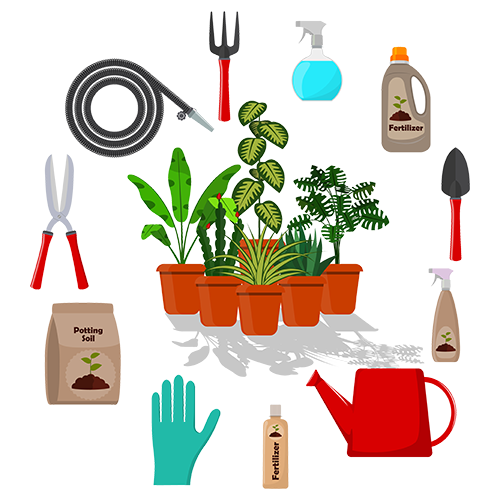
At Intraflora Nursery, our balcony plant range has been curated with Dubai's specific balcony conditions in mind — sunny and shaded orientations, high-rise and low-rise considerations, container-appropriate sizes, and UAE-proven performance. We stock everything balcony gardeners need — plants, containers, potting soil, drip irrigation, fertilisers, and styling accessories — available in a single online order with delivery across Dubai and the UAE.
Recent Posts

Plant Gifts Dubai: The Complete Guide to Giving Living Gifts That Last
Balcony Plants Dubai: The Complete Guide to Transforming Your Outdoor Space

Buy Lemon Tree UAE: The Complete Guide to Growing Citrus in Dubai and Beyond

Mango Tree Dubai: The Complete Guide to Growing, Buying & Caring for Mangoes in the UAE

Office Plants in Dubai: The Complete Guide to Greening Your UAE Workplace

Plant Nursery Al Warsan: Dubai's Green Heart & Why Intraflora Nursery Calls It Home


Succulent Plants in Dubai: The Complete Guide to Growing, Styling & Buying in the UAE

The Best Plants for the UAE Climate: The Definitive Guide for Dubai & Beyond